If you spend long periods sitting in a wheelchair or chair, the right cushion can improve comfort and help redistribute pressure across the seating surface.
The best choice depends on how long you sit, your ability to change position, the size of your chair and your individual pressure care needs.
If you already have a pressure injury, persistent skin redness or difficulty repositioning, speak with an appropriate healthcare professional before choosing a cushion.
Quick Answer
Start by measuring the usable width and depth of your chair.
Then consider how long you usually remain seated and whether you can regularly change position yourself.
Foam cushions generally provide stable everyday support. Gel cushions conform around the body and are often combined with foam. Air cushions can provide more specialised pressure management but may require additional setup and maintenance.
There isn't one cushion type that's best for everyone.
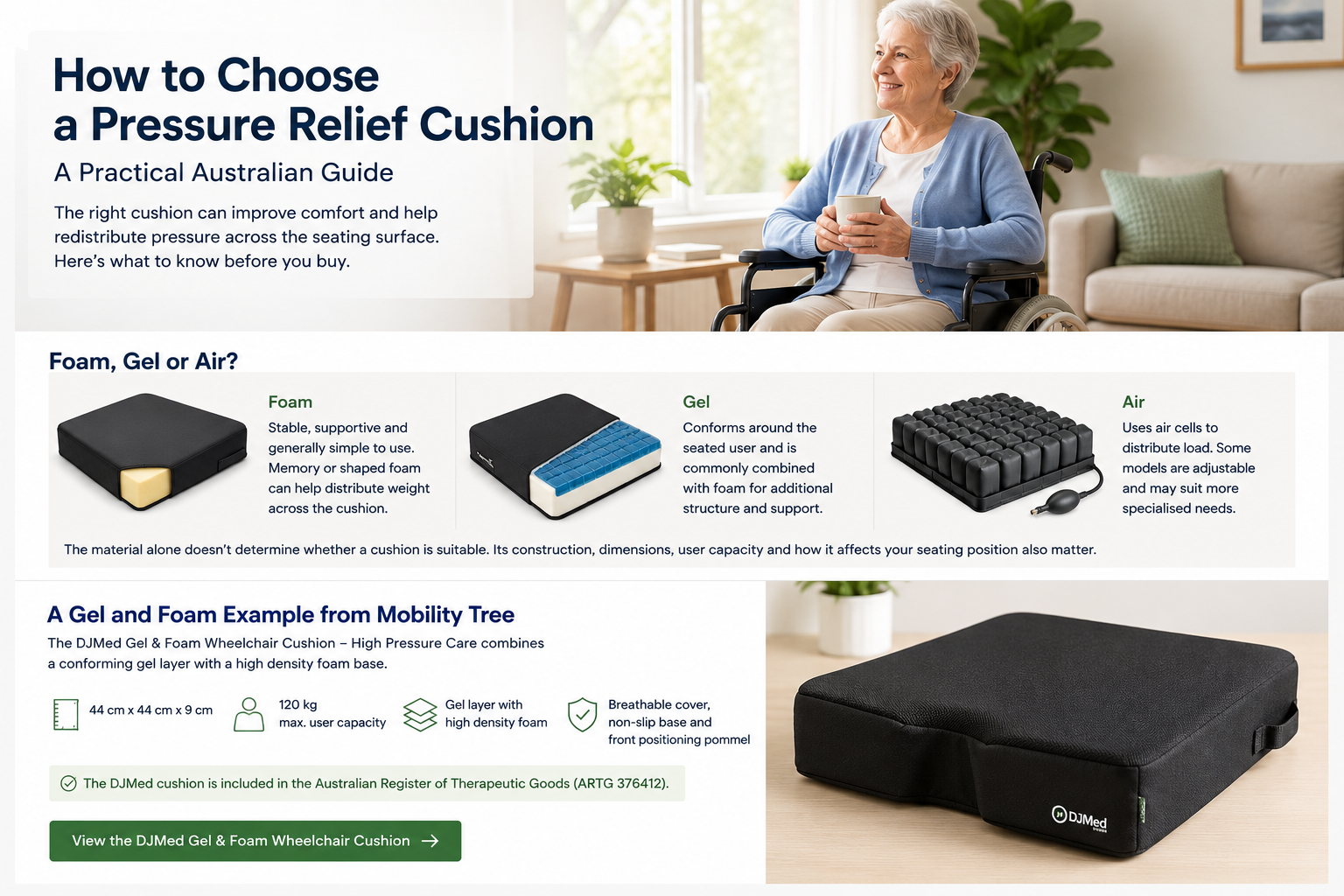
Foam, Gel or Air?

| Cushion |
What to Know |
| Foam |
Stable, supportive and generally simple to use. Memory or shaped foam can help distribute weight across the cushion. |
| Gel |
Conforms around the seated user and is commonly combined with foam for additional structure and support. |
| Air |
Uses air cells to distribute load. Some models are adjustable and may suit more specialised pressure care needs. |
The material alone doesn't determine whether a cushion is suitable. Its construction, dimensions, user capacity and how it affects your seating position also matter.
Measure Your Chair Before Buying
Don't assume that a cushion labelled for wheelchair use will automatically fit your wheelchair.
Measure the usable seat width and depth, particularly the space between the armrests.
Also check the cushion height. A thick cushion raises your sitting position and can change the relationship between your feet, armrests and wheelchair.
For example, a 44 × 44 cm cushion needs an appropriate seating area. Trying to squeeze it into a smaller seat can affect how the cushion sits and how comfortably you are positioned.
Think About How You Use the Chair
Someone who sits for an hour or two has different requirements from someone who spends most of the day seated.
Your ability to reposition yourself also matters. A pressure care cushion can help redistribute load, but it doesn't replace movement, repositioning or skin monitoring where these are required.
The cover is worth checking too. Breathability, liquid resistance, ease of cleaning and a non slip base can make a significant difference in everyday use.
A Gel and Foam Example From Mobility Tree

The DJMed Gel & Foam Wheelchair Cushion – High Pressure Care combines a conforming gel layer with a high density foam base.
It measures 44 cm × 44 cm × 9 cm, has a 120 kg maximum user capacity, and includes a breathable cover, non slip base and front positioning pommel.
The DJMed cushion is included in the Australian Register of Therapeutic Goods (ARTG 376412).
View the DJMed Gel & Foam Wheelchair Cushion
Always check your chair measurements before ordering.
What About Recliner Chairs?
A pressure cushion can sometimes be used on other seating, but take extra care with recliners and lift chairs.
Adding a cushion raises the sitting position and can change seat depth, foot support and the way someone gets into or out of the chair.
If the person already has difficulty with positioning or transfers, professional advice may be appropriate.
When Should You Get Professional Advice?
If you have an existing pressure injury, persistent redness or skin changes, reduced sensation, difficulty repositioning or ongoing pain while seated, seek advice from an occupational therapist, physiotherapist, nurse or other appropriate healthcare professional.
These situations may require an individual pressure care and seating assessment rather than simply choosing another cushion online.
Frequently Asked Questions
Can a Pressure Cushion Prevent Pressure Sores?
No cushion can guarantee prevention of a pressure injury. Appropriate seating can form part of pressure care alongside movement, repositioning, skin monitoring and individual healthcare needs.
Are Gel Cushions Better Than Foam?
Not necessarily. Gel and foam behave differently, and many cushions combine the two. Suitability depends on the user, chair and level of support required.
How Do I Know What Size Cushion I Need?
Measure the usable width and depth of the chair seat and compare those measurements with the cushion specifications. Don't rely only on the stated wheelchair size.
Can I Use a Wheelchair Cushion on a Normal Chair?
Sometimes, provided it fits securely and doesn't create an unsafe seating or transfer position. Remember that the cushion will also increase the seat height.
Australian Information and Support
For further information about pressure injury prevention and management:
Australian Commission on Safety and Quality in Health Care – Preventing Pressure Injuries and Wound Management
Healthdirect Australia – Pressure Ulcers and Pressure Sores
Both provide Australian information about pressure injury prevention, skin monitoring and management.
Important
This guide provides general information only and is not medical advice. Individual pressure care requirements vary, particularly for people with existing skin concerns or limited ability to reposition.
Mobility Tree – Empowering movement, supporting independence.