When mobility becomes a challenge, choosing the right walking aid can make all the difference in maintaining independence and quality of life. Whether you’re navigating your home, town, or more rugged outdoor terrain, finding a walker or rollator that suits your needs is crucial.
In this guide, we explain the key differences and practical considerations to help you compare the available options.
Quick answer: Choose based on the user’s balance, strength, ability to operate brakes, where the aid will be used and whether a seat is needed. A standard walker prioritises controlled support, while a rollator prioritises easier movement and convenience. Anyone with significant balance or safety concerns should seek individual advice from a physiotherapist or occupational therapist.
Rollators vs Standard Walkers: Which Option Suits Your Mobility Needs?
The choice between a rollator and a standard walker largely depends on mobility needs and the environment in which they’ll be used.
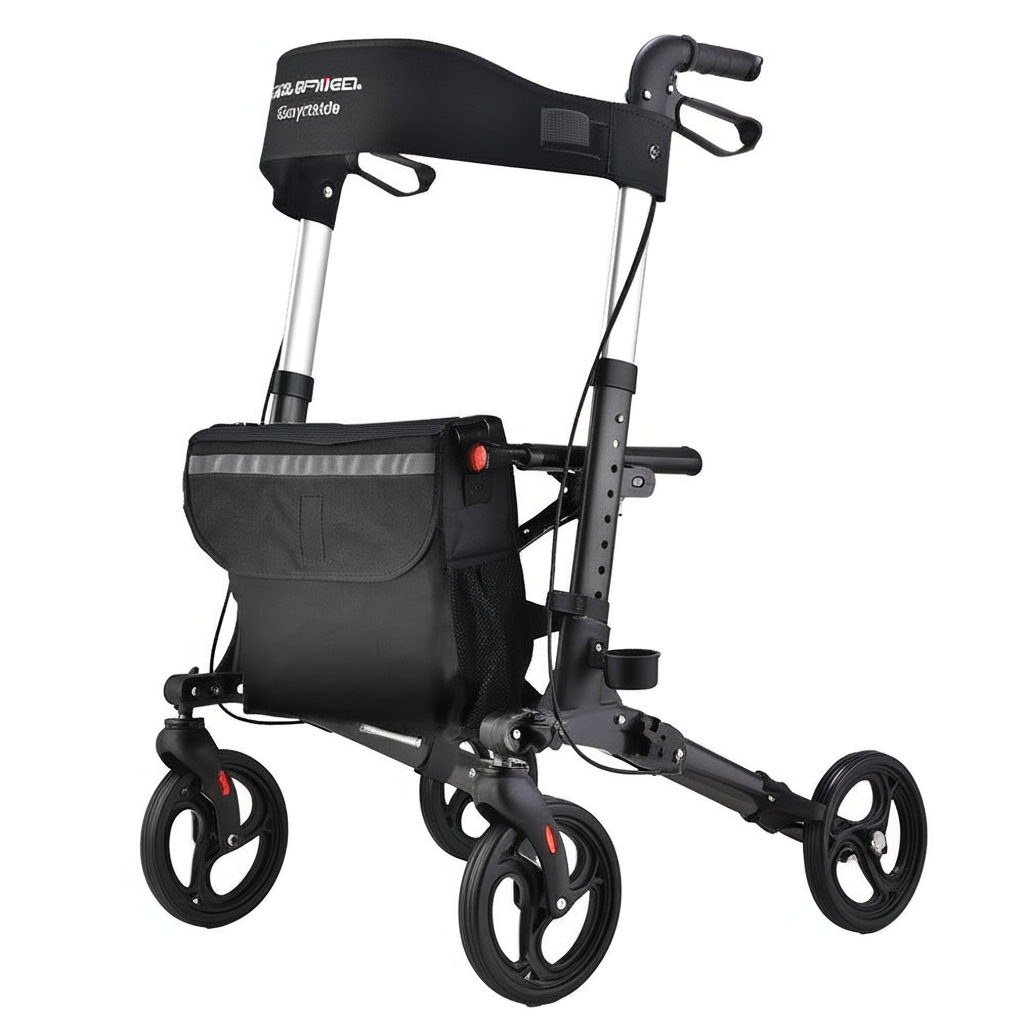
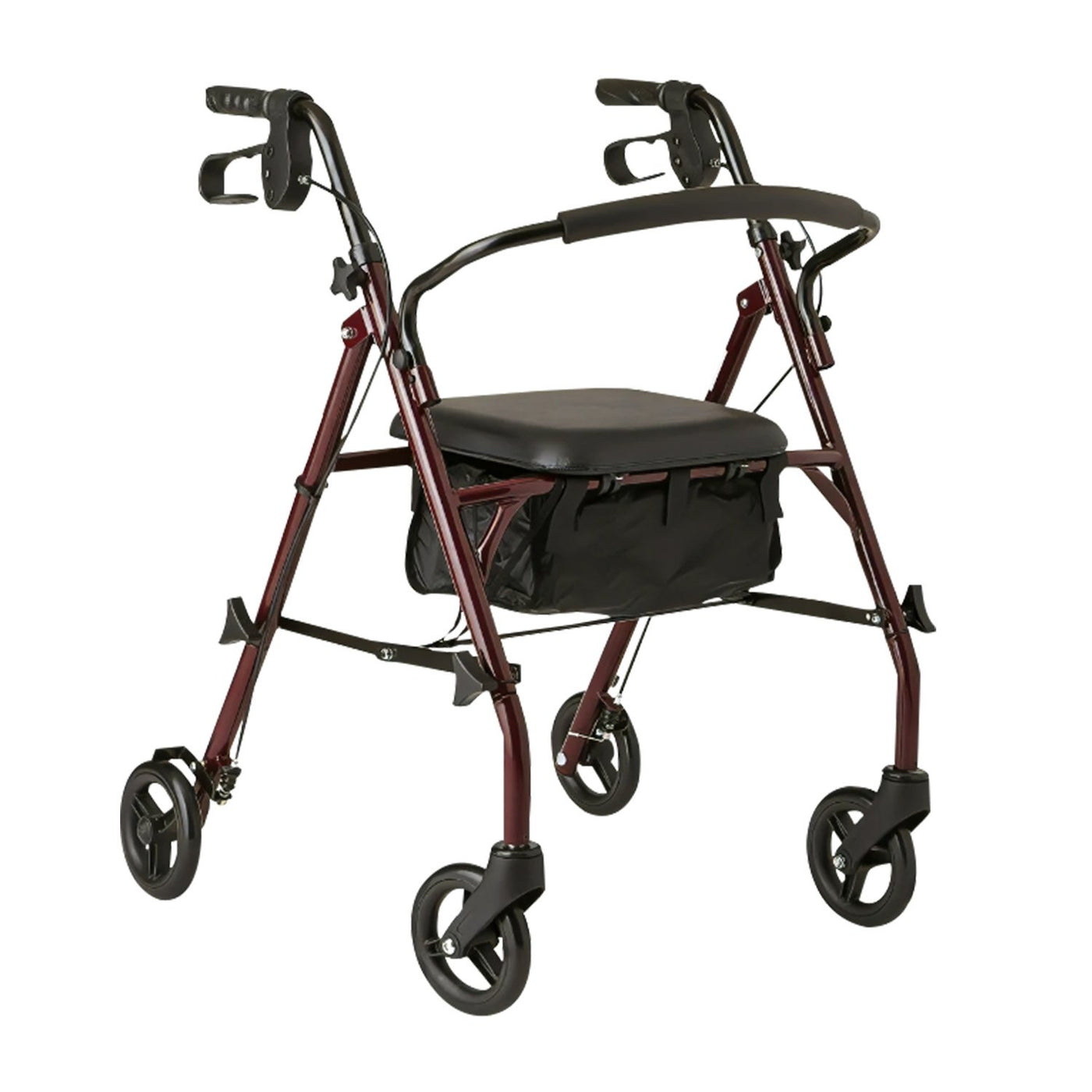
Rollators are equipped with four wheels, a built in seat, and brakes, making them highly mobile and perfect for users who need to get around freely in flat areas. They are an excellent option for people who enjoy a higher level of mobility, but they may not be suitable for everyone.
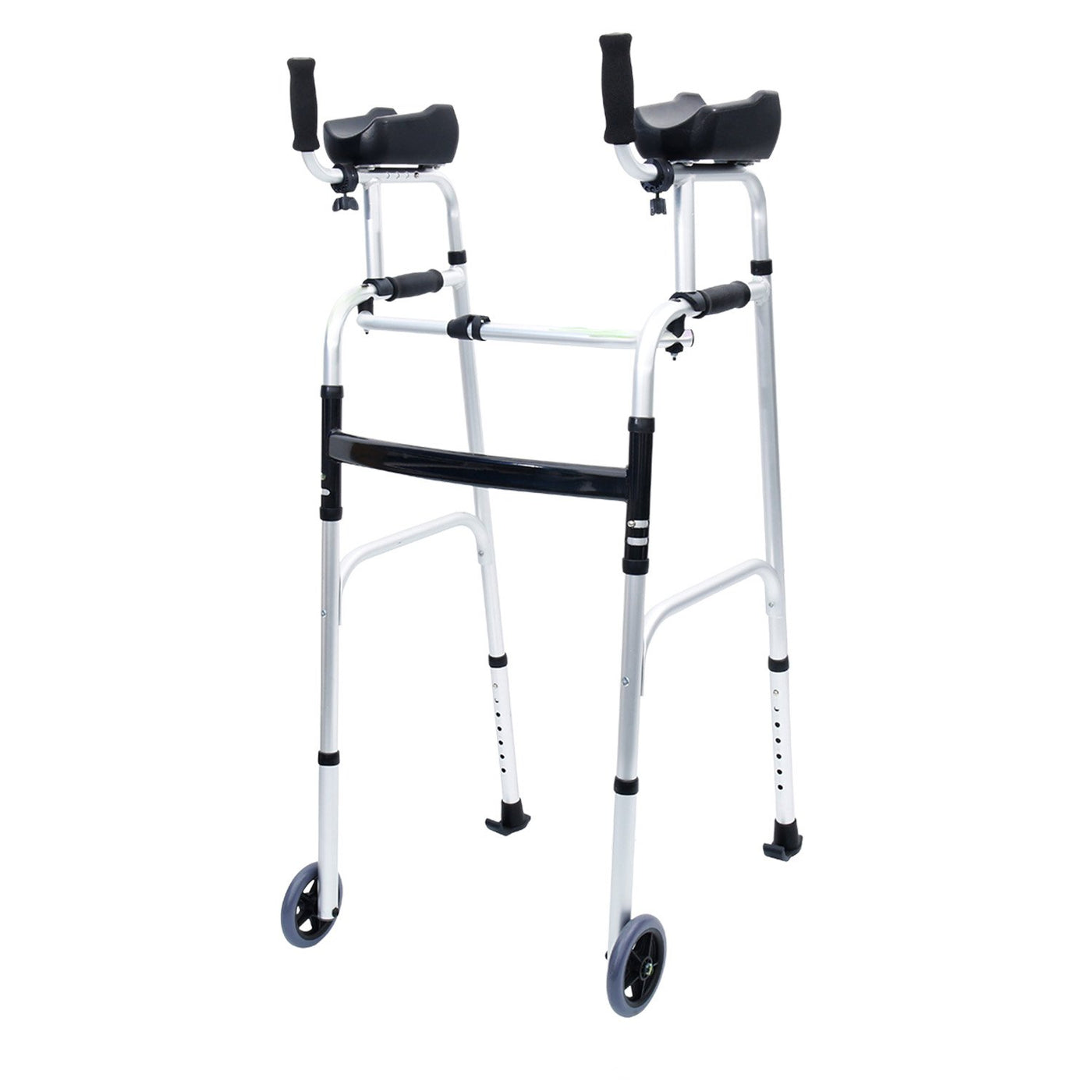
However, for individuals with balance issues, a standard Walker often with two or no wheels can provide better stability. The sturdy design of a non wheeled walker offers greater control and makes it easier to maintain posture and balance when moving.
Practical example: Some people with reduced balance may find a standard walker easier to control because it does not roll freely. Others may find a rollator supports greater freedom of movement and provides a convenient seat for rest breaks.
Do Rollators Tip Over Easily?
The stability of a rollator depends on several factors, including how well the brakes are locked, how much weight the user is putting on it, and the type of surface being navigated. Three wheel rollators are more prone to tipping due to their smaller base, especially if the user is leaning forward or pushing down on one side.
Tip: Ensure that the brakes are always locked when you’re using the seat or resting on the rollator. A common mistake I’ve seen is people forgetting to lock the brakes, which increases the risk of tipping.
For someone with poor balance, a no wheel or two wheel walker may provide more controlled support. A physiotherapist or occupational therapist can help assess the safest option.
Is the Rollator for Indoor or Outdoor Use?
The environment in which you’ll be using your rollator is a crucial factor in choosing the right model. Indoor rollators are typically designed for maneuvering in tight spaces, with smaller wheels (around 6 inches) that make it easier to navigate through doorways and hallways.
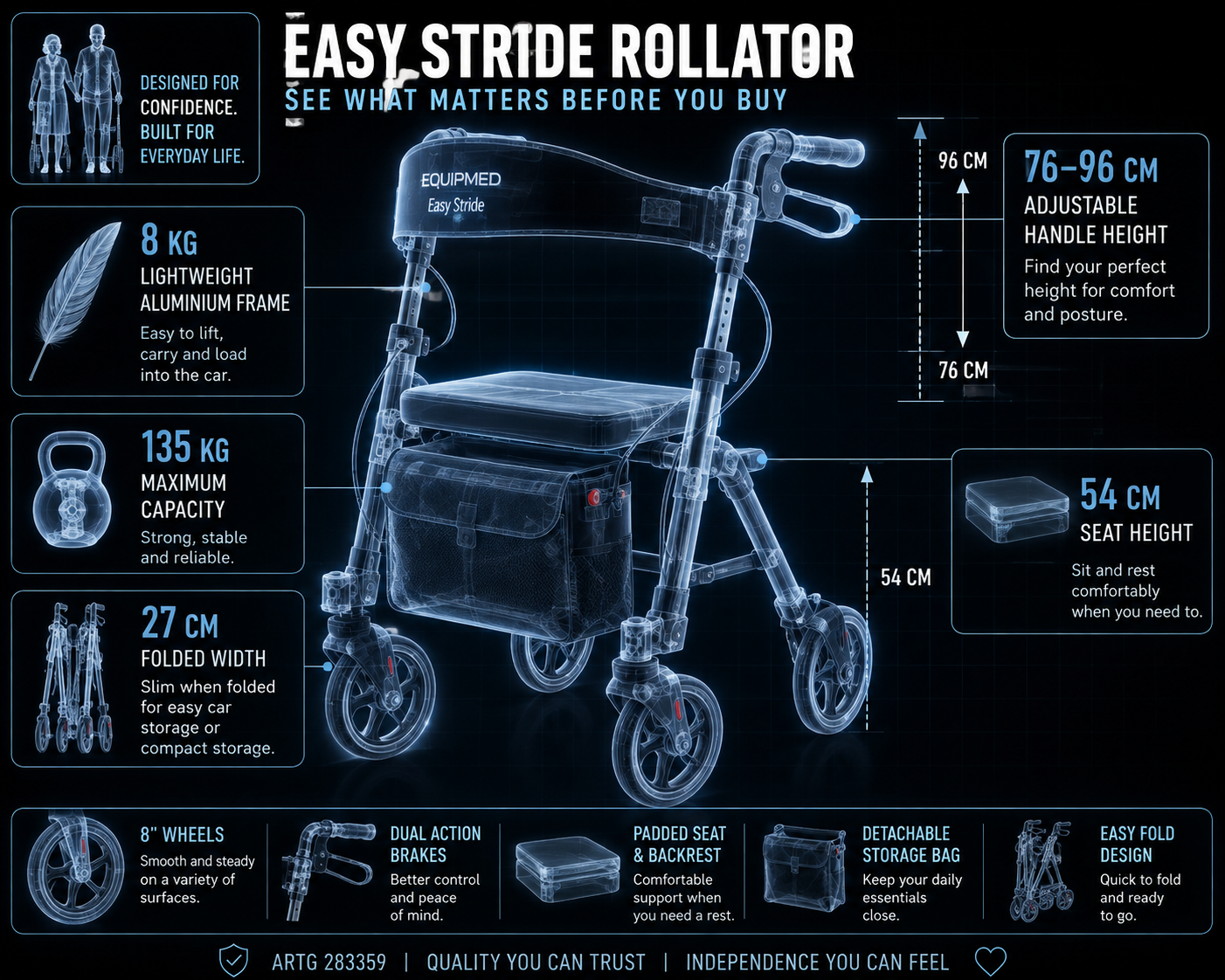
On the other hand, outdoor rollators are built to handle uneven terrain and small obstacles like curbs or cracks. Larger wheels (8 inches or more) provide better traction and stability. If you're frequently in gardens or outdoor spaces, look for models that can handle rougher surfaces and wider wheels to provide a smooth ride.
Should I Choose a Three or Four Wheel Rollator?
The choice between a three wheel or four wheel rollator depends on your mobility requirements and environment.
-
Three wheel rollators are highly maneuverable and lightweight, making them ideal for indoor use and tight spaces. However, they lack the stability of a four-wheel model and may not be the best option for individuals with poor balance.
Is Transporting and Storage Important?
If you need to transport your rollator, choosing a foldable model is key. Look for lightweight rollators that can easily be folded and stored in your car boot or a small closet. This can make it easier to take your rollator with you when travelling.
A good option is one that folds with ease and is compact enough for easy storage but still sturdy enough for daily use.

Photo Courtesy of Wheelaway
Which Walking Aid May Suit Older Adults?
For the elderly, the key is to find a walker that balances comfort, stability, and ease of use. Rollators with built-in seats are excellent for individuals who need to rest regularly, but if balance is a primary concern, a walker with two or no wheels is a better choice. In some cases a wheelchair may be more suitable.
Practical example: A four-wheel rollator with a seat may suit someone who can operate the brakes safely but needs occasional rest breaks. Someone with reduced balance or strength may require a more stable aid selected with professional guidance.
What Size Rollator Should I Choose?
The correct size rollator is crucial for comfort and safety. The handle height should be level with the crease of your wrist when standing upright. If the handles are too high or too low, it can strain your back, shoulders, and arms.
Tip: Make sure the rollator is adjustable to your specific height and needs. Many rollators have height adjustable handles, which ensures that you can customize them to your ideal position.
Ensure the Seat Height is Suitable
Like your chair at home, the seat height is a key feature for comfort. If the seat is too low, it will be difficult to get up. Conversely, if the seat is too high, it can lead to poor posture and discomfort. Ideally, the seat should allow you to sit comfortably and stand up with minimal effort.
Real Life Example: I’ve had clients who found that choosing a rollator with the wrong seat height made standing up difficult, leading to unnecessary strain. Always test the seat height before making a purchase.
Who Should Not Use a Rollator Walker?
Not everyone is suited for a rollator. Individuals with severe balance issues, those who struggle with locking the brakes, or people who have limited strength might not be able to safely use a rollator.
Alternative: For these individuals, a manual wheelchair or traditional walker may be a better fit. Always consult with a healthcare provider to make the best decision for your safety.
Types of Rollators: Which One is Right for You?
Four Wheel Rollators, Most Stable & Comfortable
Four wheel rollators are the most stable option, making them perfect for users who need both independence and comfort. They come with seats for resting, making them suitable for longer walks or outdoor use.
Heavy Duty Rollators, Strong & Sturdy
If you need a heavy duty rollator to support a higher weight capacity or handle more rugged terrain, look for models with larger wheels and stronger frames.
Hybrid Rollators (Rollator-Transport Chair) The Best of Both Worlds
Hybrid rollators are an excellent choice for individuals who need both mobility support and the ability to be transported over longer distances. These models can be used as a standard rollator or converted into a transport chair when needed.
![]() Key Features to Look for in a Rollator
Key Features to Look for in a Rollator
-
Frame Material – Lightweight vs. Heavy-Duty
-
Wheels – Small or Large?
-
Braking System – Safety First!
-
Seat & Backrest – Comfort Matters
-
Storage Options – Carry What You Need
-
Adjustability – A Rollator That Fits You
Maintenance & Safety Tips
To keep your rollator in top condition, regularly check for wear and tear. Ensure the brakes are functioning properly, the seat is stable, and the wheels are in good shape. Always store your rollator in a dry environment to avoid corrosion or damage. Check with your supplier for more tips.
WALKER VS ROLLATOR FAQS
What is the main difference between a walker and a rollator?
A standard walker usually has no wheels or two front wheels and provides more controlled support. A rollator generally has three or four wheels, hand brakes and often a seat, making it easier to move but requiring the user to control the brakes safely.
Is a rollator suitable for everyone?
No. A rollator may not suit someone who has significant balance, strength or brake control difficulties. A physiotherapist or occupational therapist can assess individual needs and help select and fit an appropriate walking aid.
How high should walker or rollator handles be?
Handle height should be adjusted specifically for the user. Correct fitting can improve posture, comfort and control, so professional fitting is worthwhile where there are mobility or safety concerns.
Can a rollator be used outdoors?
Some rollators are designed for outdoor use, but suitability depends on the wheel size, surface, product specifications and the user’s ability. Always check the manufacturer’s instructions and avoid surfaces the product is not designed to handle.
SOURCES & FURTHER READING
• Healthdirect Australia – Mobility aids
• Queensland Health – Walking aid selection, fitting and safety guidance
Content updated: July 2026
FINAL THOUGHTS: CHOOSING THE RIGHT WALKING AID
Choosing the right rollator is about more than just getting from point A to point B. It’s about enhancing your independence, improving your quality of life, and staying active. When you find the right rollator, it’s like unlocking a whole new level of freedom.
Ready to compare your options? Browse our range of walkers and rollators.
Return to the Mobility Tree Knowledge Hub →
Looking for funding assistance? Explore our Australian Government Funding guides.